The Rise of Stablecoin Merchant Adoption in the US Corporate Sector
Published · · Updated
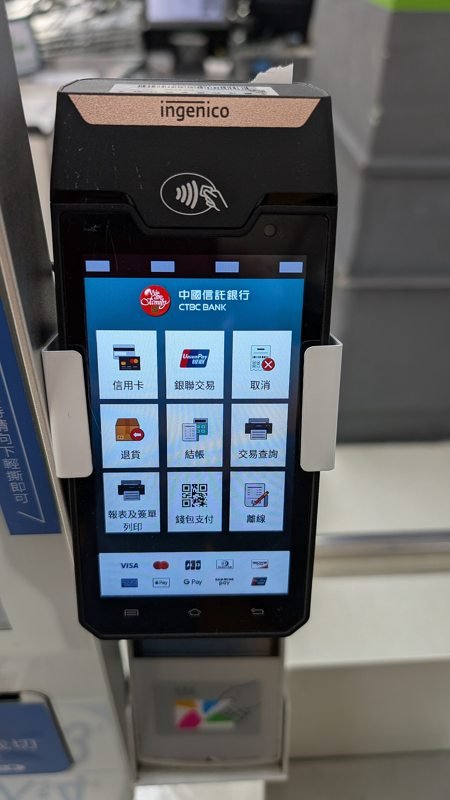
Stablecoin acceptance is moving into established payment product offerings, but product availability and actual corporate usage are different measures. Stripe’s documentation provides a concrete example of a merchant payment flow in which a customer pays with a supported stablecoin and the business receives settlement through its provider balance. That capability is evidence of an available infrastructure model, not proof that every US business uses it or that adoption is rising at a particular rate. This analysis examines the operational questions behind merchant interest: whether customers already hold the supported asset, how the payment fits an existing checkout, and whether finance teams can reconcile the proceeds in their reporting currency. It deliberately avoids unsupported market-share or growth claims. To evaluate adoption in your own business, compare completed customer demand, total settlement costs and support workload against your existing payment options rather than treating an industry announcement as a business case.
Practical considerations
- Distinguish supported payment products from measured customer usage.
- Verify current merchant eligibility, accepted assets and settlement terms with the provider.
- Measure a controlled pilot by completion rate, reconciled net receipts and the number of support exceptions.
Separate infrastructure availability from measured adoption
A company announcing a stablecoin payment product demonstrates that a capability is being offered. It does not establish how many merchants use it, how much genuine commerce it processes or whether a particular business will benefit. Keep those questions separate when reading market commentary.
Stripe’s documentation supplies one concrete implementation example: a customer uses a supported stablecoin payment method and settlement is handled through the merchant’s provider arrangement. Check its current eligibility and accepted-token documentation for the exact product. Do not assume that documentation for a stablecoin product means that every token, network or US entity is supported.
Define which adoption question matters to your business
An online retailer may be interested in checkout demand, while a corporate finance team may be evaluating a treasury or supplier-payment workflow. Those are different use cases with different evidence requirements. Name the intended workflow before collecting market statistics or comparing vendors.
For a merchant, useful evidence can include requests from existing customers, the availability of a supported receiving route and the ability to reconcile final receipts. A general statistic about token transfers does not replace that investigation. Check what a published dataset counts before using it to justify a business decision.
Build a controlled merchant pilot
Choose a limited customer cohort and define the payment methods that remain available. Document the supported token-network pair, settlement destination and refund process. Give support staff the same instructions customers will see so they can identify a mistaken transfer without guessing.
Before launch, specify the measures that would justify expanding the pilot. Examples include paid-order completion, reconciled net receipts, time to usable funds and the number of support exceptions. Decide how to count abandoned requests and repeat attempts. Otherwise, a large number of generated invoices can be mistaken for successful adoption.
Measure the denominator
If you report that a share of orders used a new payment method, define which orders were eligible and which period was observed. A cohort of customers already holding the asset cannot automatically represent all visitors. Keep the cohort definition with the result so the conclusion stays proportional to the evidence.
Example: a hypothetical 100-order experiment
Consider a fictional merchant testing an optional stablecoin route on 100 eligible orders. Suppose 12 customers select it and 9 complete payment. These figures are invented for this example and are not US market statistics. The merchant should distinguish selection from completion and investigate the three incomplete attempts before declaring the pilot successful.
It then reconciles the nine receipts, records actual deductions and reviews support contacts. If all nine payments ultimately depend on a settlement route that finance cannot operate reliably, the checkout result alone does not justify expansion. Conversely, a low initial share may still be useful for a specific customer cohort if the operational result is sound.
Assess internal readiness alongside customer interest
The team needs a defined treatment for invoice amounts, fees, currency conversion and refunds. Engineering needs verified payment events and reliable state transitions. Support needs a public transaction reference it can request without asking for secrets. These requirements should be tested together rather than assigned to separate projects after launch.
Plan ownership for provider changes, unavailable withdrawals and incidents. A payment method can add complexity even when customers like it. Compare that additional work with observed benefits in your own pilot, and preserve the option to keep the method limited to the use cases where it helps.
Read vendor and industry claims critically
For each adoption claim, ask who produced the evidence, what population it covers and whether it measures a live behavior or a future intention. A survey of interest, a count of accounts and a total transfer volume answer different questions. Avoid combining them into an unsupported estimate of merchant market share.
This article does not supply a proprietary market survey or a forecast of US corporate adoption. Its purpose is to turn the general topic into a practical evaluation method. When you do use a third-party statistic, link the original methodology and date, and explain the limitation most relevant to your decision.
Conclusion: prove the business case locally
The existence of more infrastructure makes evaluation possible; it does not make adoption mandatory. Start with a documented use case, a small eligible cohort and measures based on completed, reconciled payments. Use the fee and invoicing guides to design that pilot, then expand only if your own evidence supports it.
Turn the analysis into an operating review
Define one customer cohort and three measurable outcomes before running a merchant pilot.
Explore related payment guides →Primary sources
General education only. Provider support, costs and rules may change. Consult the linked documentation and qualified advisers for your own circumstances.